
Internet Safety
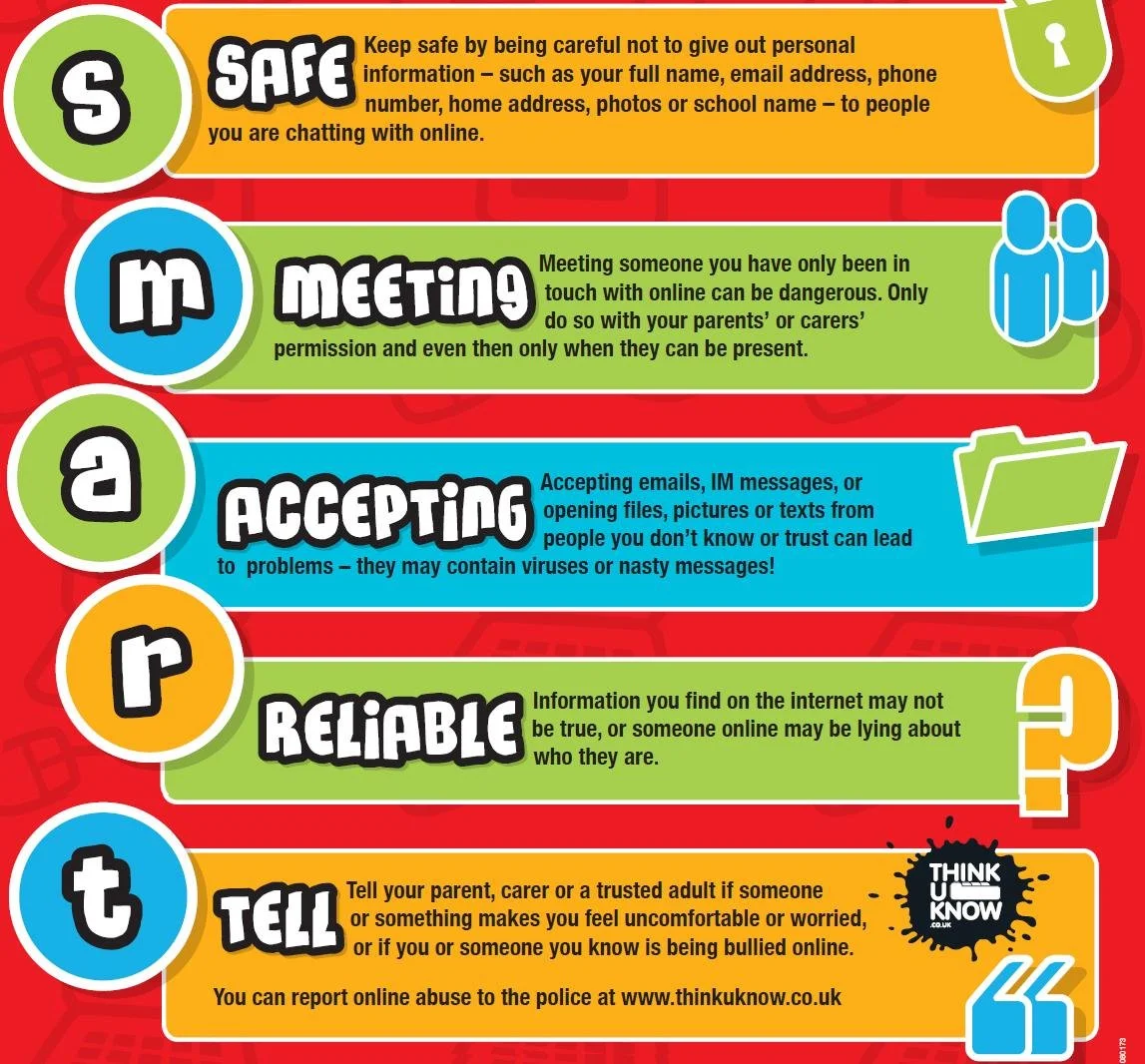
The internet is a powerful tool, but it's important to use it wisely and safely. Here are some tips to help protect yourself online:
1. Protect Your Personal Information
- Don't share personal information like your address, phone number, or passwords online.
- Use strong, unique passwords and change them regularly.
2. Think Before You Click
- Be cautious when clicking on links or downloading attachments from unknown sources.
- Avoid suspicious emails, messages, or pop-ups that ask for personal information.
3. Keep Software Updated
- Regularly update your operating system, browser, and antivirus software to stay protected.
4. Use Social Media Responsibly
- Adjust privacy settings to control who can see your information.
- Be mindful of what you post; once it's online, it's hard to delete completely.
5. Stay Safe When Using Public Wi-Fi
- Avoid accessing sensitive accounts (like banking) on public networks.
- Use a VPN (Virtual Private Network) for extra protection.
6. Talk to Someone If You Feel Unsafe
If you experience cyberbullying, online scams, or anything that makes you feel uncomfortable, talk to a trusted adult, teacher, or community support worker.